BPRA’s Work to Rehabilitate the Coca Leaf
The Beneficial Plant Research Association is working to rehabilitate the coca leaf by restoring public understanding of one of the world’s most misunderstood beneficial plants.
For thousands of years, coca has been revered by Indigenous peoples of the Andes as a sacred, nutritional, medicinal, and cultural plant. Yet outside its traditional context, the leaf has too often been reduced to fear, stigma, and policy narratives that obscure its deeper significance.
Through education, research, storytelling, and cross-cultural dialogue, BPRA is helping shift public perception of coca from fear and stigma toward curiosity, cultural appreciation, and responsible scientific inquiry.
The documentary The Coca Leaf: A Most Beneficial Plant is one important expression of this broader mission. The film will bring coca’s story to a wider public by centering Indigenous voices, historical context, scientific perspectives, and the living traditions that continue to sustain relationship with the leaf.
But the film is not the whole work. It is part of BPRA’s larger commitment to beneficial plants, traditional ecological knowledge, cultural sovereignty, and a more respectful global conversation about plant medicine.
Our Intended Outcomes
BPRA’s coca work is designed to advance several interconnected outcomes:
Rehabilitate the coca leaf’s public reputation
We seek to restore coca to its fuller context as a sacred Andean plant, a source of traditional nutrition and medicine, and a symbol of resilience, reciprocity, and cultural memory.
Advance responsible scientific inquiry
We support renewed whole-plant research into coca’s phytochemistry, traditional uses, and potential contributions to human wellbeing, while avoiding sensational or reductionist narratives.
Expand public education
Through the documentary, companion educational materials, public programming, and digital media, BPRA will create accessible resources for audiences in ethnobotany, conservation, integrative health, policy, and the broader public.
Support informed dialogue and policy imagination
BPRA aims to open space for more nuanced conversations about beneficial plants, traditional use, Indigenous rights, public health, and the consequences of criminalization.
Strengthen a broader movement for beneficial plants
Coca is one part of BPRA’s larger mission: to preserve and disseminate traditional ecological and ethnobotanical knowledge and to promote a more ethical, evidence-informed understanding of beneficial plants.
"plants are not inherently good or bad, but rather it is our relationship with them that matters, with coca being a prime example of a plant that has been wrongly considered bad."
- Dr. Andrew Weil with Tim Ferriss
COCA LEAF RESOURCES WORTH EXPLORING

Tim Ferris Show, The "Divine Leaf" with Wade Davis and Andrew Weil, June 25, 2026

Davis, Wade. “Secret History of Coca.” Rolling Stone, April 6, 2025.
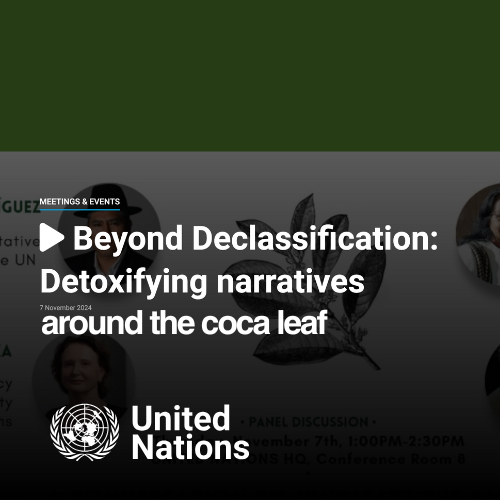
Beyond Declassification: Detoxifying narratives around the coca leaf at United Nations with Dr. Wade Davis, November 7, 2024

Transnational Institute: the World Health Organization (WHO) will conduct a critical review of the coca leaf over the next year, July 15, 2024, with Dr. Wade Davis

Coca: Lessons for the Psychedelic Movement with Dr. Andrew Weil at SXSW, March 2024
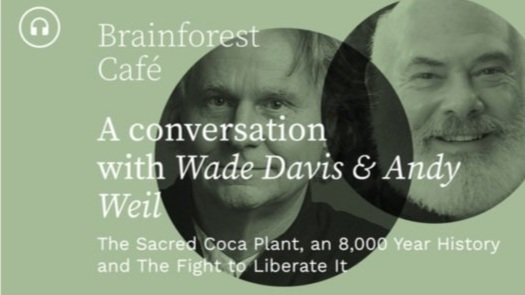
The Sacred Coca Plant, an 8,000 Year History Dr. Andrew Weil and Wade Davis on Brainforest Café with Dennis McKenna
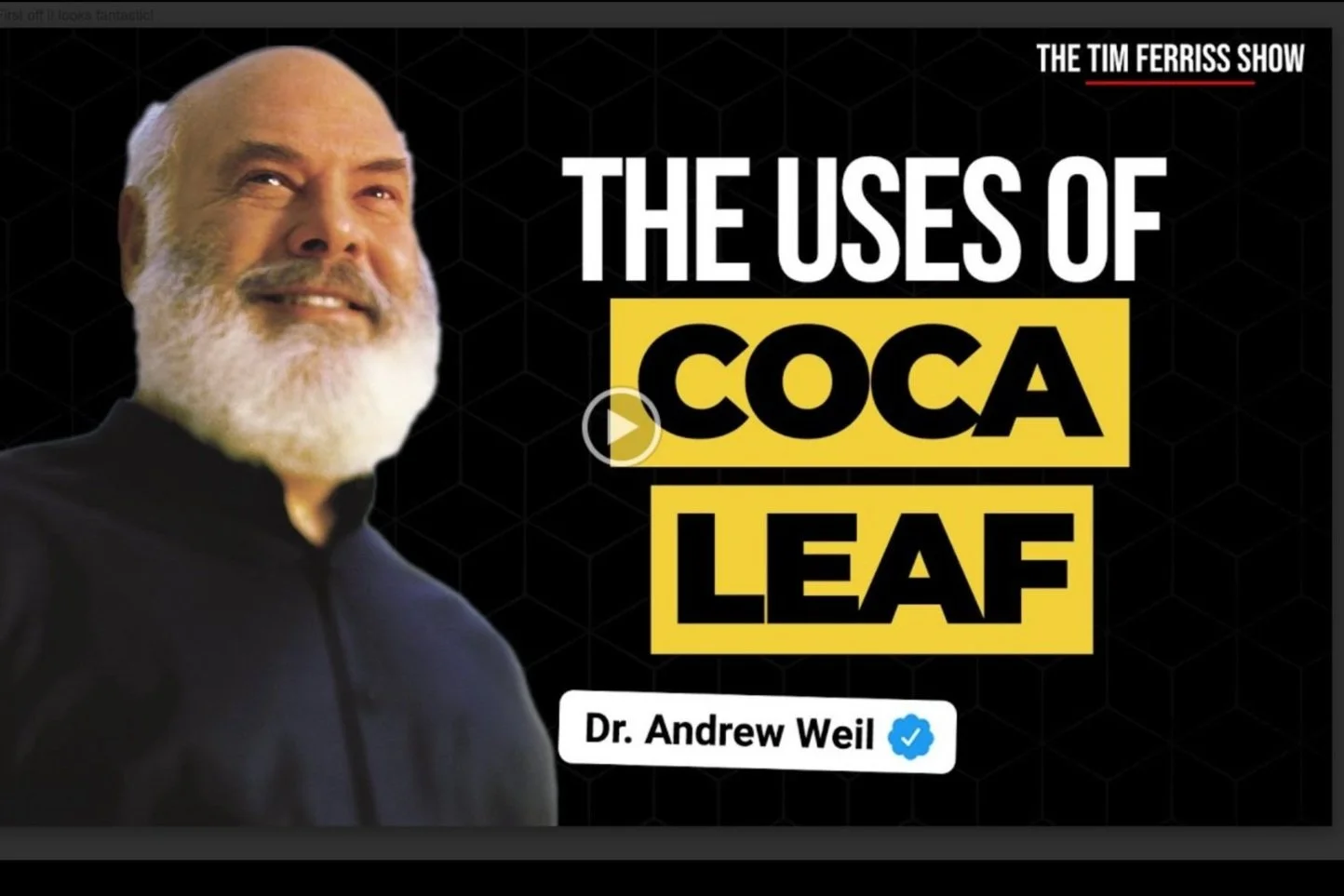
The Tim Ferriss Show: The Uses of Coca Leaf with Dr. Andrew Weil, August 22, 2022
Khoka Project has dedicated over a decade to studying coca through its own agency.
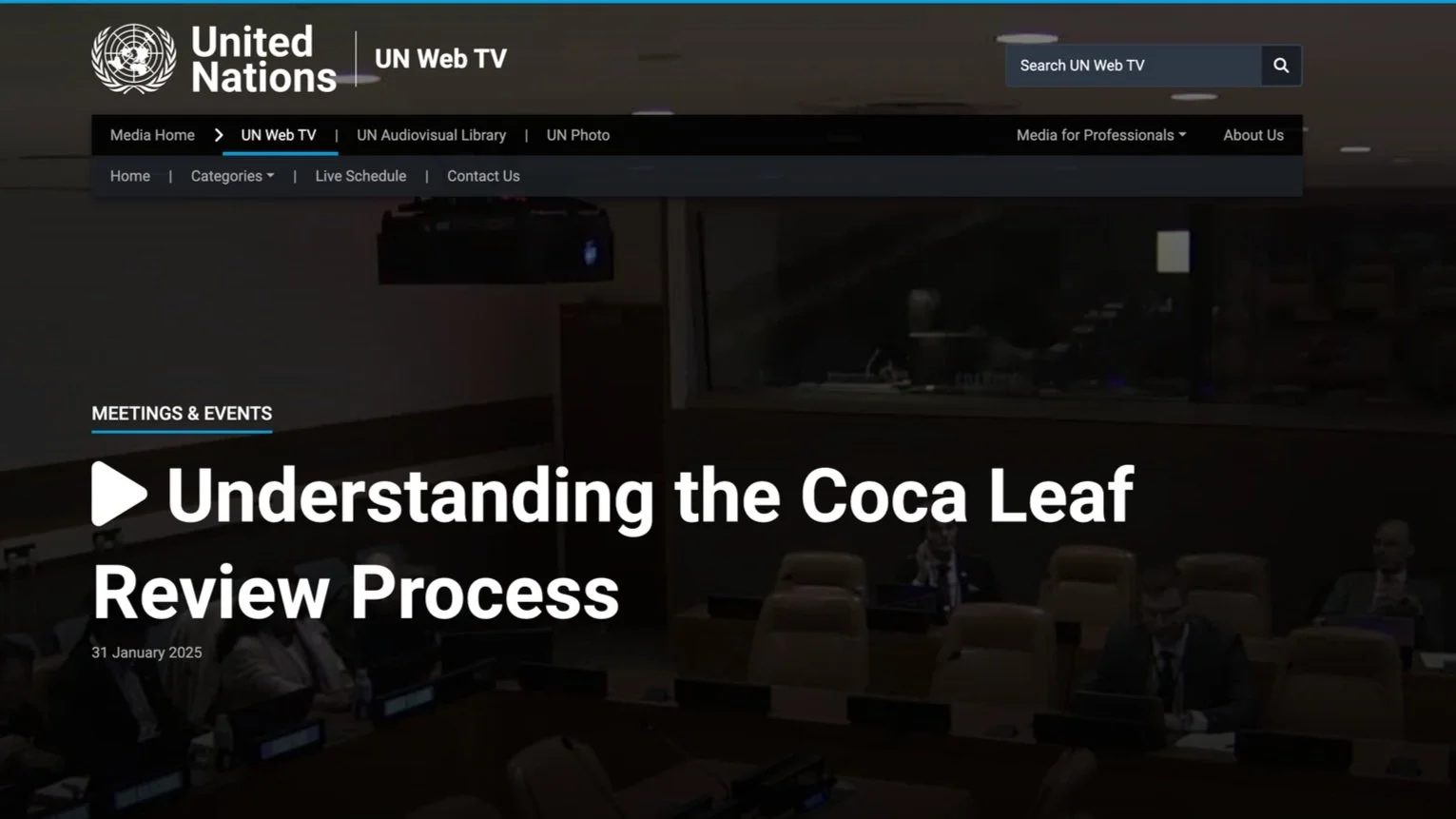
Understanding the Coca Leaf Review Process at United Nations
Weil, Andrew. “Saturn Return: Scenes from the Life of a Psychedelic Pioneer.” Harper’s Magazine 2023.
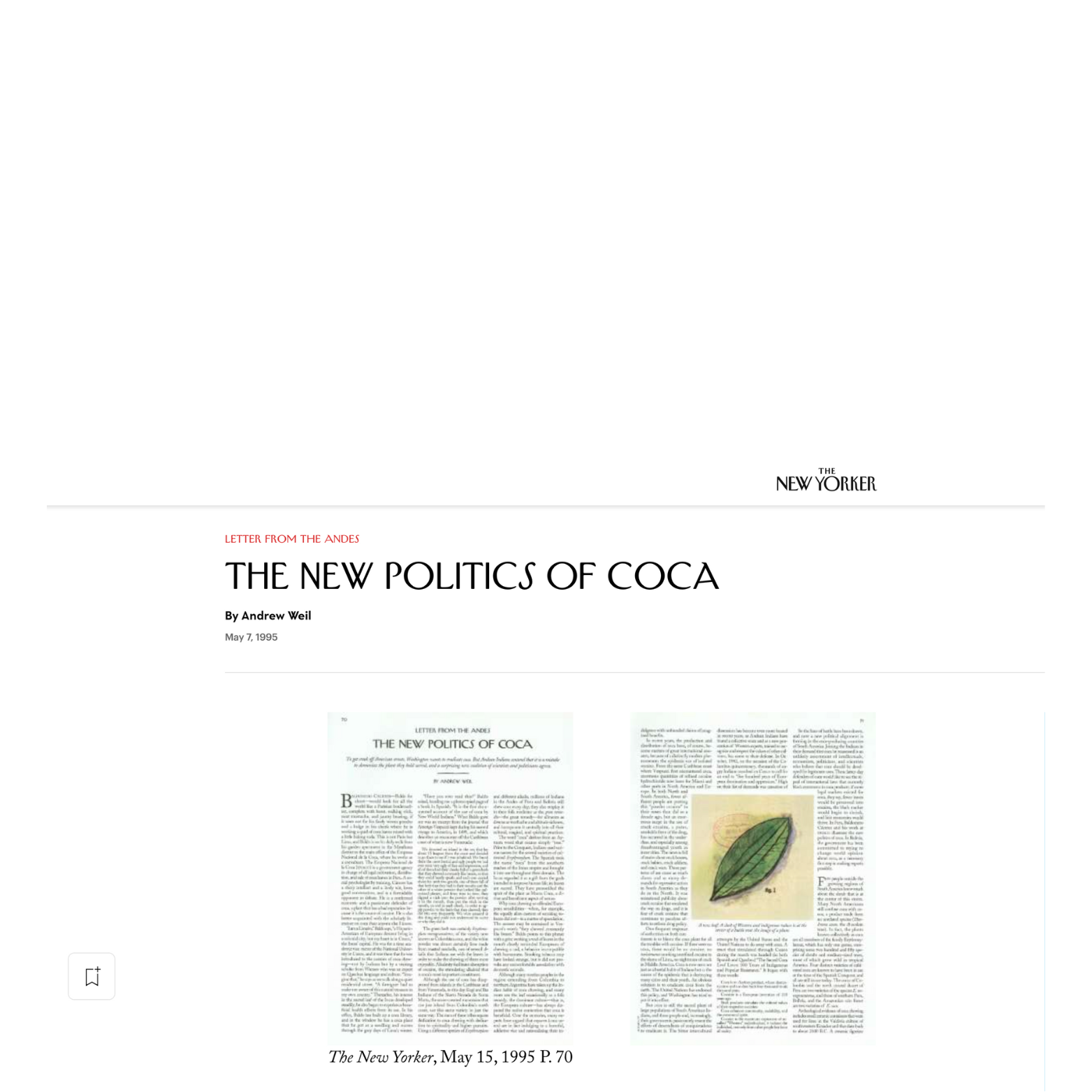
Weil, Andrew. “The New Politics of Coca.” The New Yorker, May 7, 1995
Weil, Andrew T. 1981. "The Therapeutic Value of Coca in Contemporary Medicine." Journal of Ethnopharmacology.
Weil, Andrew. “The Green and the White: Coca and Cocaine.” In The Marriage of the Sun and Moon: Dispatches from the Frontiers of Consciousness, 177–189. Boston: Houghton Mifflin, 1980

“Doctor Urges Study of Coca Leaf as Drug.” The New York Times, February 19, 1978
Want to stay informed on all things coca?
Sign up to receive our Substack newsletter to learn more about the coca leaf
Make a donation to support the Coca Documentary